
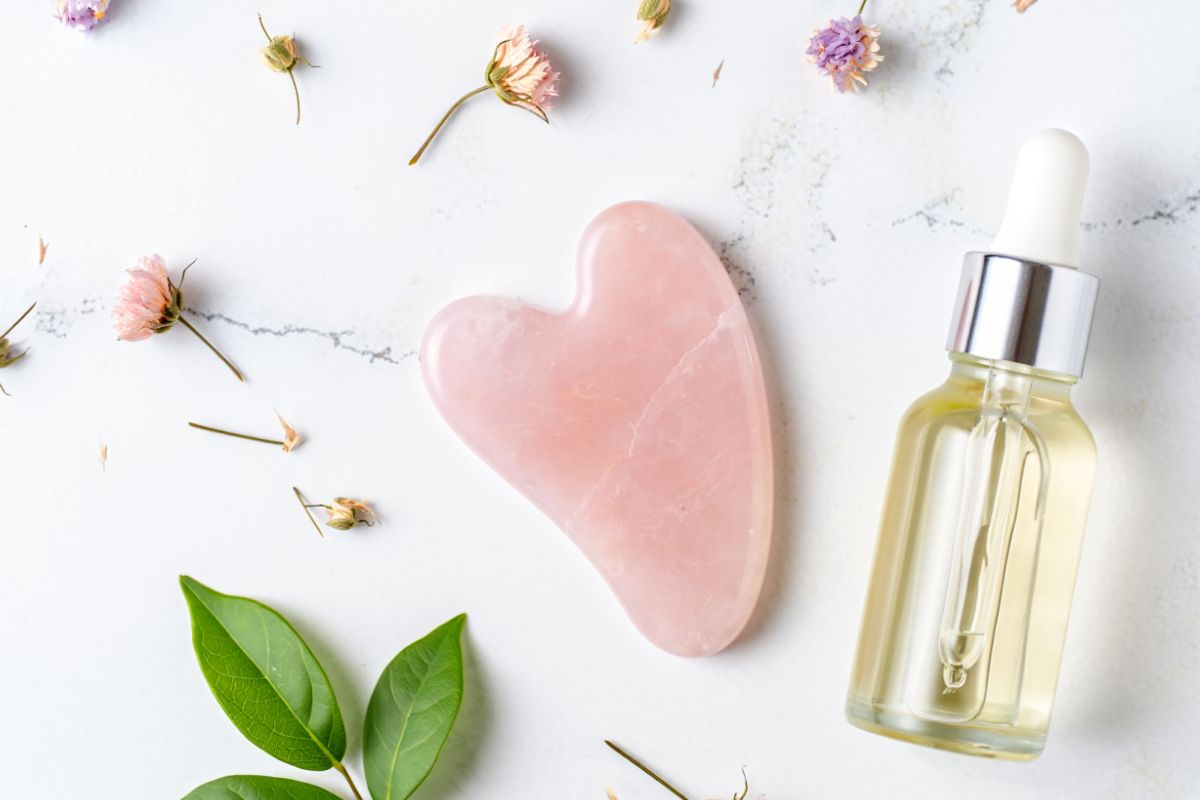

Gua Sha Tool: Relax and Restore Your Skin Naturally
Gua sha is an ancient Chinese medicine technique using a smooth, flat tool to gently scrape the skin and improve circulation. In modern skincare, a gua sha tool (often carved from jade, rose quartz, or stainless steel) is used as a facial or body massage instrument. When used correctly, a gua sha tool can relieve muscle tension, drain lymphatic fluid, and revitalize tired-looking skin, all while providing a relaxing self-care ritual. Research shows that gua sha massage increases microcirculation (small-vessel blood flow) and lymphatic drainage, which can help detoxify the skin and reduce puffiness. In fact, Cleveland Clinic experts note that gua sha “has been shown to increase microcirculation” in treated areas, promoting a healthier blood supply. Over time, this increased circulation can lead to brighter, firmer skin (by stimulating collagen and elastin) and improved facial contours.
Whether you’re dealing with puffiness under the eyes, tension in the jaw, or dull, stressed skin, a gua sha tool can be a gentle, non-invasive way to relax and restore your skin’s radiance. This article covers everything you need to know about the gua sha tool – from key benefits and materials (jade vs stainless steel) to step-by-step usage tips. By incorporating this simple technique into your routine, you can enjoy smoother, more toned skin and a soothing facial massage experience.
Benefits of the Gua Sha Tool
Using a gua sha tool can offer multiple skin and health benefits. Studies and experts suggest that gua sha massage may help to:
- Improve circulation and microcirculation. Gua sha scraping increases blood flow in the treated area, bringing oxygen and nutrients to skin cells.
- Reduce inflammation. The gentle scraping motion can trigger an anti-inflammatory response, helping reduce swelling and redness.
- Relieve muscle tension and pain. Many people find that gua sha eases tight muscles (such as in the neck, shoulders, or jaw). In fact, gua sha is traditionally used in East Asia for musculoskeletal pain relief.
- Stimulate collagen and elastin production. Increased circulation from facial gua sha can boost collagen and elastin synthesis, which helps reduce fine lines and firm the skin. This can lead to a smoother, more youthful-looking complexion.
- Reduce puffiness and improve lymphatic drainage. The scraping motion gently encourages lymph flow, helping to drain excess fluid. As a result, facial puffiness (especially under the eyes and along the jaw) can diminish, giving the face a more sculpted appearance.
- Promote relaxation and stress relief. Many users report that the ritual of gua sha is deeply calming. The slow massage strokes and light pressure can soothe the nervous system, reducing stress and tension.
“Although scientific study on gua sha is limited, the practice is traditionally used to help promote circulation, reduce inflammation, and relieve pain,” notes Healthline’s review of the evidence. In practice, these benefits translate to a glowing complexion, reduced forehead and eye puffiness, and even a lifted jawline over time. For example, a recent clinical trial found that women using gua sha regularly showed measurable improvements in facial contour, hinting at better-defined cheekbones and jawlines.
Gua Sha Tool for Face and Jawline
A gua sha tool shines in facial massage. Many people use it daily or weekly on the face to relax, de-puff, and lift facial features. For instance, a gentle gua sha routine under the eyes and along the jaw can sculpt and define the jawline, while also smoothing out fine lines. One study noted that gua sha users had reduced facial surface measurements—changes “inferred to produce long-term improvements in nasolabial fold appearance and jawline definition”.
When using a gua sha tool on your face, the goal is to gently sweep along the natural contours. Always start with a clean face and a drop of facial oil or serum to provide slip. Then:
- Forehead and temples: Sweep from the center of your forehead out toward the temples in light, upward strokes.
- Under eyes: Very gently glide the tool under the eyes, from the inner corner out toward the temples. This can reduce under-eye bags and boost circulation.
- Cheeks and jaw: Starting at the center of your face (nose or chin), drag the tool outward along the cheekbones and jawline toward the ears. For the jawline specifically, sweep from the chin up along the jawbone to the earlobe.
- Neck and décolleté: After the face, use the tool on the neck and chest, sweeping downward toward the collarbone to encourage lymphatic drainage.
By repeatedly gliding the gua sha tool in these directions, you help lift facial muscles and release tension. Most experts recommend light to moderate pressure on the face to avoid bruising. If done correctly, gua sha should feel soothing, not painful. Over time, this facial massage routine can help your face appear more lifted and rested.
Gua Sha Tool for Body
Gua sha isn’t just for the face – it can be applied to many parts of the body too. A body gua sha tool is typically larger and used with firmer pressure. Practitioners and massage therapists often use gua sha on the back, shoulders, neck, and limbs to ease muscle knots and improve circulation. For example, dragging the tool in long strokes along the shoulders or back can help disperse “stagnant blood” and relieve tightness.
When used on the body, gua sha often produces petechiae (tiny red or purple spots) or mild bruises. This is actually normal – it means blood is being drawn to the surface. One guide explains that “mild bruising often occurs, which is the result of blood flowing to the surface of the skin” during body gua sha. These marks typically fade in a day or two. The key is that by breaking up these red spots, the body initiates healing and inflammation reduction in that area.
Benefits on the body include relief of chronic aches and tension. In Traditional Chinese Medicine, gua sha is used to treat conditions like muscle tightness and stiffness. Even Western reviews note that gua sha may provide longer-lasting relief from lower back and neck pain compared to a hot pack. So if you carry stress in your neck, shoulders or back, applying gua sha with firm strokes along muscle fibres can be very soothing.
Gua Sha Tool Materials: Jade, Rose Quartz, Stainless Steel
Gua sha tools come in a variety of materials and shapes. The choice of material can affect the feel of the massage:
- Jade or Rose Quartz Stone: Traditionally, gua sha stones are made from semi-precious stones like jade or rose quartz. These stones stay cool to the touch, which can feel refreshing on the skin. Jade is denser and very smooth, giving a firm, gliding massage. Rose quartz is typically a bit softer and slightly porous, offering a gentler touch. Many users love the soothing, warm sensation of a chilled jade gua sha tool for depuffing.
- Stainless Steel or Metal: More recently, stainless steel gua sha tools have become popular. Stainless steel tools are non-porous and hypoallergenic, so they don’t harbor bacteria and are easy to sanitize. They also have a cooling effect and are very durable. Health experts point out that stainless steel instruments “are non-porous and cooling, so you don’t have to worry about cleaning your tool as often”. This makes them a great choice for acne-prone or sensitive skin (they won’t absorb oils or microbes).
- Other Materials: Some gua sha tools are made of wood, ceramic, or other stones (like amethyst or Bian stone). Wood and horn tools are softer and more biodegradable. Each material offers a slightly different sensation, but the massage technique is similar.
Rose quartz and jade gua sha facial massage tools (often sold in sets with a jade roller).
In practice, choose the material that feels best on your skin and fits your cleansing routine. For example, if you like cooling metal, a stainless steel gua sha might be ideal. If you prefer a more traditional feel, a jade or rose quartz tool can be very pleasing. You can even keep stone tools in the fridge before use for extra cooling.
How to Use a Gua Sha Tool (Technique)
Mastering the gua sha technique is key to getting results. Here are step-by-step tips:
- Prepare your skin and tool: Cleanse your face or the body area you will work on. Wash the gua sha tool with soap and water to sanitize it.
- Apply oil or serum: Generously apply a facial oil, serum, or moisturizer to create slip on the skin. This ensures the tool glides smoothly without pulling.
- Hold at a 15–30° angle: Keep the tool almost flat against your skin. A shallow angle (about 15°) maximizes contact and massage effect.
- Use gentle upward/outward strokes: Move the tool slowly along your skin in an upward and outward direction (toward the hairline or heart). For example, sweep from the chin up to the earlobe, or from the inner eye area toward the temples. Healthline advises scraping at a 15–30° angle in gentle strokes.
- Repeat each stroke: Perform each glide stroke 3–5 times before moving to the next area. Always be gentle on thin facial skin. On the face, apply only mild pressure – enough to feel tension but not pain. You should not press so hard that you bruise or leave red petechiae on the face. If you do see marks on the face, ease up.
- Tension areas: If you feel a tight or knotted muscle, you can linger slightly and apply a bit more pressure there. This helps release the muscle tension. On the neck, chest, or back, firmer strokes are acceptable. Just stop if any sharp pain occurs.
- Clean after use: After your session, wash the gua sha tool again to remove oils and bacteria. Experts warn that any skin break (pimple or cut) could be a risk factor. “Cleaning the tool after each use can help reduce the risk of infection if the skin tears or bleeds,” Healthline advises. Do not use the tool on open wounds, active acne, eczema, or sunburned skin.
Facial gua sha routine example: Start at the center of your face and work outward. For under-eye de-puffing, sweep the tool from the inner eye area toward the temples. For contouring, glide along the cheekbones toward the ears. To drain lymph, move from the jaw down the neck to the collarbones. Always follow the natural lines of your muscles.
Frequency: You don’t need to gua sha every day. For facial use, once or twice a week is generally ideal. This is enough to see benefits without overdoing it. For sore muscles on the body, you can use it as needed (even daily on areas of tension). Listen to your body: a little redness or warmth is fine, but if you bruise, give your skin a rest before the next session.
Gua Sha Tool Sets and Where to Buy
Many retailers sell gua sha sets that include multiple tools (often along with a jade roller). For example, a typical set might include a heart-shaped gua sha tool for the face and a roller for daily massage. Sets are a great way to try different shapes and materials. You can find gua sha tools at beauty and wellness stores, spa boutiques, or online marketplaces. Brands like Mount Lai, Tweezerman, and Mario Badescu offer stainless steel and stone gua sha tools.
To find a tool near you, try searching your local beauty shops or wellness boutiques for “gua sha tool.” Even drugstores and wellness shops are stocking them due to popularity. Online, a quick search for “gua sha tool near me” will show local and online sellers. Because these tools are affordable and reusable, they make a great gift for anyone interested in natural skincare.
FAQs
What is a gua sha tool and how does it work?
A gua sha tool is a smooth-edged massage instrument (often made of jade, quartz, or metal) used in traditional Chinese therapy. When gently scraped across the skin, it is believed to release muscle tension and “stagnant energy,” boosting blood and lymphatic flow. Modern use focuses on relaxing tight muscles, reducing puffiness, and improving skin appearance.
What are the benefits of using a gua sha tool?
Benefits include enhanced circulation, reduced inflammation, and relief of tension. Facial gua sha can also stimulate collagen production and improve skin firmness. It helps drain lymphatic fluid (reducing swelling and puffiness) and can sculpt the jawline over time. Many users find the massage deeply relaxing as well.
How do I use a gua sha tool on my face?
Start with a clean face and a facial oil or serum. Hold the tool flat and gentle, then sweep it in upward/outward motions. For example, rub under each eye from the nose toward the temple, and then sweep the tool from the chin up along the jawline toward the ear. Always be gentle – light pressure is enough on the face. Rinse your tool afterwards and let your skin absorb the products.
How often should I use gua sha on my face?
For facial treatment, Healthline recommends about once or twice a week. This allows your skin to benefit from the massage without irritation. You can gua sha more often on areas of muscle tension (like your neck or shoulders) as needed. If your skin becomes red or irritated, give it a day or two to rest.
What material should my gua sha tool be?
Choose based on your preference. Stainless steel gua sha tools are non-porous, durable, and stay cool on the skin – great for cleanliness and sensitive skin. Jade or rose quartz tools are traditional; they feel smooth and soothing (and can be chilled for extra cooling). Jade stones tend to be very dense and maintain coldness, while rose quartz is slightly softer. Pick whichever feels best on your skin.
Can gua sha tools really help with the jawline?
Yes. Regularly using a gua sha tool along the jawline can improve facial contour over time. A recent trial found women who used gua sha noticed better-defined jawlines and reduced nasolabial folds. By increasing circulation and relaxing the muscles under the skin, the jawline appears tighter and more sculpted.
Are there any side effects?
Gua sha is generally safe when done properly. You may see temporary redness or tiny red spots (petechiae) where you scraped – this is normal and indicates blood flow to the surface. Mild bruising can also occur, especially on the body where more pressure is used. These marks usually fade in a day or two. Always avoid broken skin, active acne, or rashes, and do not scrape too hard. Clean your tool before and after each use to prevent infection.
Where can I buy a gua sha tool?
Gua sha tools are widely available online and in stores. Look in beauty supply shops, wellness boutiques, or pharmacy skincare aisles. Many brands sell sets with multiple gua sha tools and jade rollers. You can also simply search “gua sha tool near me” online to find local retailers.
Conclusion
In summary, a gua sha tool is a simple yet powerful addition to any skincare routine. By gently scraping the skin, it promotes circulation, reduces inflammation, and relieves tension. Used regularly (even just a few times a week), it can leave your skin looking brighter, firmer, and more relaxed. Since the technique is non-invasive and easy to learn, it’s an accessible wellness practice for almost anyone.
Whether you choose a cooling stainless steel tool or a classic jade stone, remember to always use light pressure on the face and keep your tool clean. With consistent use, you’ll likely notice less puffiness, smoother skin texture, and a more defined jawline. Ready to give it a try? Grab your gua sha tool, follow the steps above, and enjoy a few minutes of relaxation in your skincare regimen.
Have you tried gua sha? Share your experience in the comments below or on social media! And if you found this guide helpful, feel free to share it with friends who’d love to rejuvenate their skin.
